
How to Choose Wine Label Paper
Choose wine label paper with the bottle and adhesive in mind. Compare texture and print, then test condensation, water exposure and edge lift on the bottle.
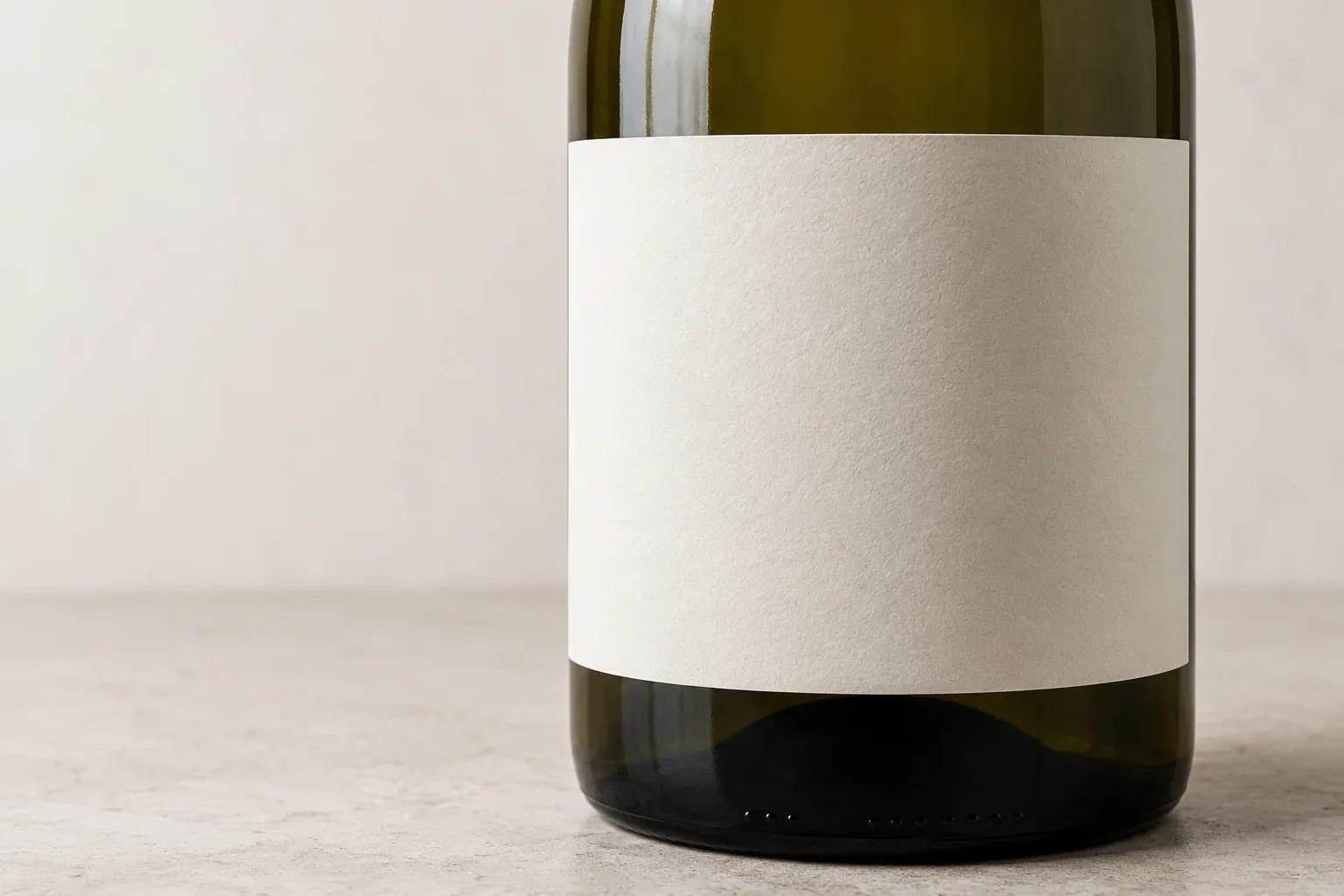
Cover: wine label application concept, not a tested product or customer project.
Choose wine label paper as part of a complete construction: paper, adhesive, bottle and printed finish. The appearance of a loose sheet does not establish how a finished label will behave.
Define the conditions
State whether the bottle will be refrigerated, exposed to condensation or placed in an ice bucket. Agree the water exposure, duration and inspection points with the material supplier and label converter. Check changes in appearance, show-through, wrinkling and edge condition. A wet-strength description is not a promise of waterproof performance in every setting.
Compare surface and print
Compare candidate samples under the same light, then proof the actual artwork. Review small type, barcodes, solid colours and foil detail. Include white ink or a protective finish if it belongs in the intended design. The converter should confirm printing, drying and finishing settings for the selected stock.
Validate on the bottle
Use the actual bottle shape, label dimensions and adhesive system. Record the bottle surface, curvature and application conditions. Inspect contact, bubbles and edge lift, then repeat the checks under the intended refrigeration or water exposure. Assess both the print and the bond. When requesting samples, include the bottle, labelling method and intended use. Suitability of any QiLi stock requires validation of this complete construction; a collection name alone does not establish suitability for wine labels.
Specify face paper or the complete label
A face-paper sample helps compare surface and print directions. It is not a finished self-adhesive label with an approved adhesive, liner and converting process. If a label construction already exists, provide the complete combination. If it is undecided, identify the open face-paper, adhesive and liner choices for the relevant suppliers and label converter to assess together. An unapplied paper sample does not approve the complete label system.
Six details to send with a trial brief
Selection stage: State whether you need a surface shortlist, a label-material assessment or a trial on the intended bottle, and identify the question this round should resolve.
Bottle information: Provide the actual bottle or its dimensions, material, surface condition and label position. Identify main and neck labels that need separate approval.
Label construction: Record the candidate face paper, adhesive, liner and known specifications. Mark open items for confirmation rather than using a collection name as a construction specification.
Artwork and conversion: Supply production artwork, label dimensions or a dieline, plus the printing, foil, die-cutting and other finishing sequence.
Use and application conditions: Describe the labelling method and intended display or refrigeration. Agree exposure, inspection points and acceptance criteria with the project team.
Approval and retained samples: Identify the approver, sample reference and record location. Keep the labelled bottle, photographs and conditions, and reassess affected results after construction or process changes.
Approve the main label, neck label and outer box individually, then compare the complete pack for colour and sheen. The same colour name does not establish a visual match across different surfaces.
Prepare resources and request project samples
Use the wine and spirits label application page to frame the project. Describe service conditions through the performance-requirement screening route; a category name is not performance evidence. Download the wine-label material guide (PDF, Chinese and English, 2 pages), prepare the RFQ information brief, and submit your material and bottle-trial requirements. Confirm the suitability of the exact paper and complete label construction through physical samples and project trials.