
Specialty Paper RFQ Checklist: 10 Details for a Quote
Prepare a specialty paper quote request with grade, colour, size, quantity, printing, finishing and delivery requirements. Includes a brief you can copy.
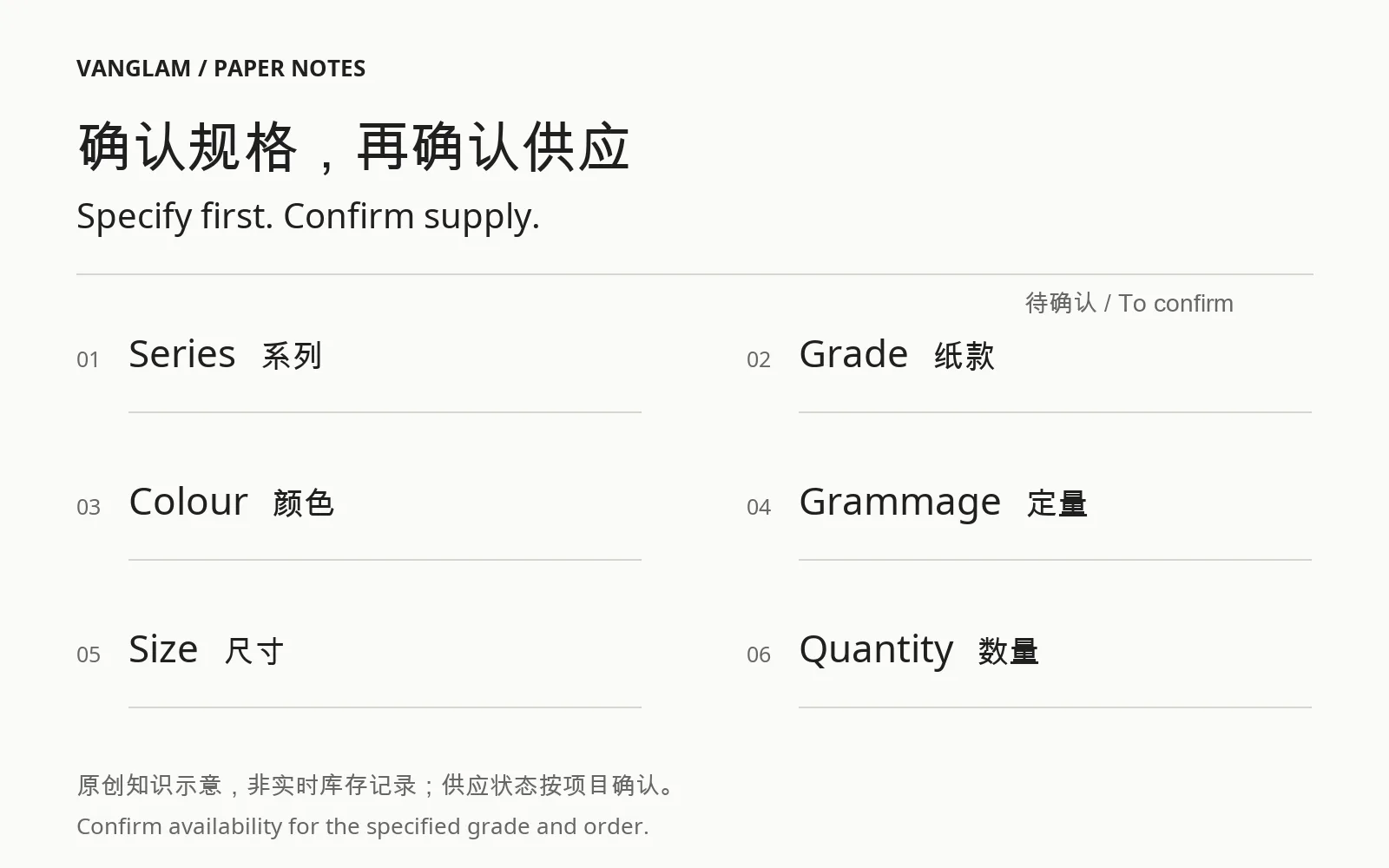
Cover: an RFQ specification checklist, not a live stock record. Confirm availability for the specified grade and project.
A request for “premium specialty paper” leaves too many variables open for a comparable quotation. Put the application, material, quantity and delivery requirements in one brief. Distinguish sample selection, standard-stock purchasing and custom development before comparing prices.
Ten details to include in your RFQ
Application and component. Identify a box wrap, folding carton, shopping bag, card or cover and explain the paper's role. Specify wrapping paper and structural board separately.
Grade and surface. Provide the complete grade name if selected. Otherwise describe the desired colour, gloss, feel or texture. Use the product catalogue to shortlist directions; photographs do not establish performance.
Colour reference. Provide a physical reference or an identified colour number. Screen images, HEX values and print colour references help communication but do not automatically define acceptance of physical paper. Review different packaging components together.
Grammage and thickness requirements. State any existing requirement and its purpose. If undecided, explain the construction and feel you need. Grammage, thickness and stiffness require separate confirmation.
Purchase size and grain direction. Distinguish finished dimensions, print-sheet requirements and purchased paper size. Specify sheets or reels, units, grain direction and equipment constraints, then confirm the available format.
Quantity and units. List the initial order, quantity per colour or grade and anticipated repeat demand. State sheets, reels, kilograms or tonnes explicitly so quotations use a comparable basis.
Printing and conversion. Identify the press process, ink and artwork needs, plus foil, creasing, embossing, bonding or wrapping operations. Validate critical operations using the intended paper and finished construction.
Performance and documentation. Describe actual contact, friction, moisture exposure or other use conditions and destination-market documentation requirements. Check certifications, recycled-content statements and suitability against the specific grade and valid documents.
Samples and approval. Specify a deck, colour swatches or machine-trial stock, and who approves colour, print and the finished pack. Retain approved samples and records; these sampling stages serve different purposes.
Delivery and quotation scope. Give the destination country or city, required receipt milestone and shipping needs. Agree whether the quotation includes freight, duties, taxes and other applicable items. Availability, timing and commercial terms require project confirmation.
Separate stock, custom orders and sample quantities
Confirm availability by grade, colour and format rather than assuming every catalogue combination is stocked. Current product information states a custom-development minimum of 50,000 sheets in the standard zhengdu format; confirm the exact dimensions and project basis. This is neither a sample-request quantity nor a universal minimum for all standard products. Use the written project confirmation for development and supply terms.
A brief you can copy
Application / component: ____; grade / surface / colour reference: ____; grammage and thickness requirements: ____; purchase size / grain: ____; quantity per variant and units: ____; printing / finishing: ____; performance / documents: ____; sample stage and approver: ____; destination: ____; required receipt milestone and quotation scope: ____.
Review the available product literature and sample-request process. If the grade is undecided, submit a sampling brief. For a dedicated material development, use the Custom Lab to explain your objectives and constraints. Confirm the material and approval basis before comparing final quotations.
To align your buyer, designer and printer, download the Specialty Paper Buyer Checklist (PDF, Chinese and English, 2 pages). Organise the project, material, process and supply questions before submitting your sampling brief.