Alternative-fibre paper: specify the grade first
Bamboo, bagasse, grass and cotton describe fibre directions. A useful specification also identifies the grade, surface, printing process and finished application.
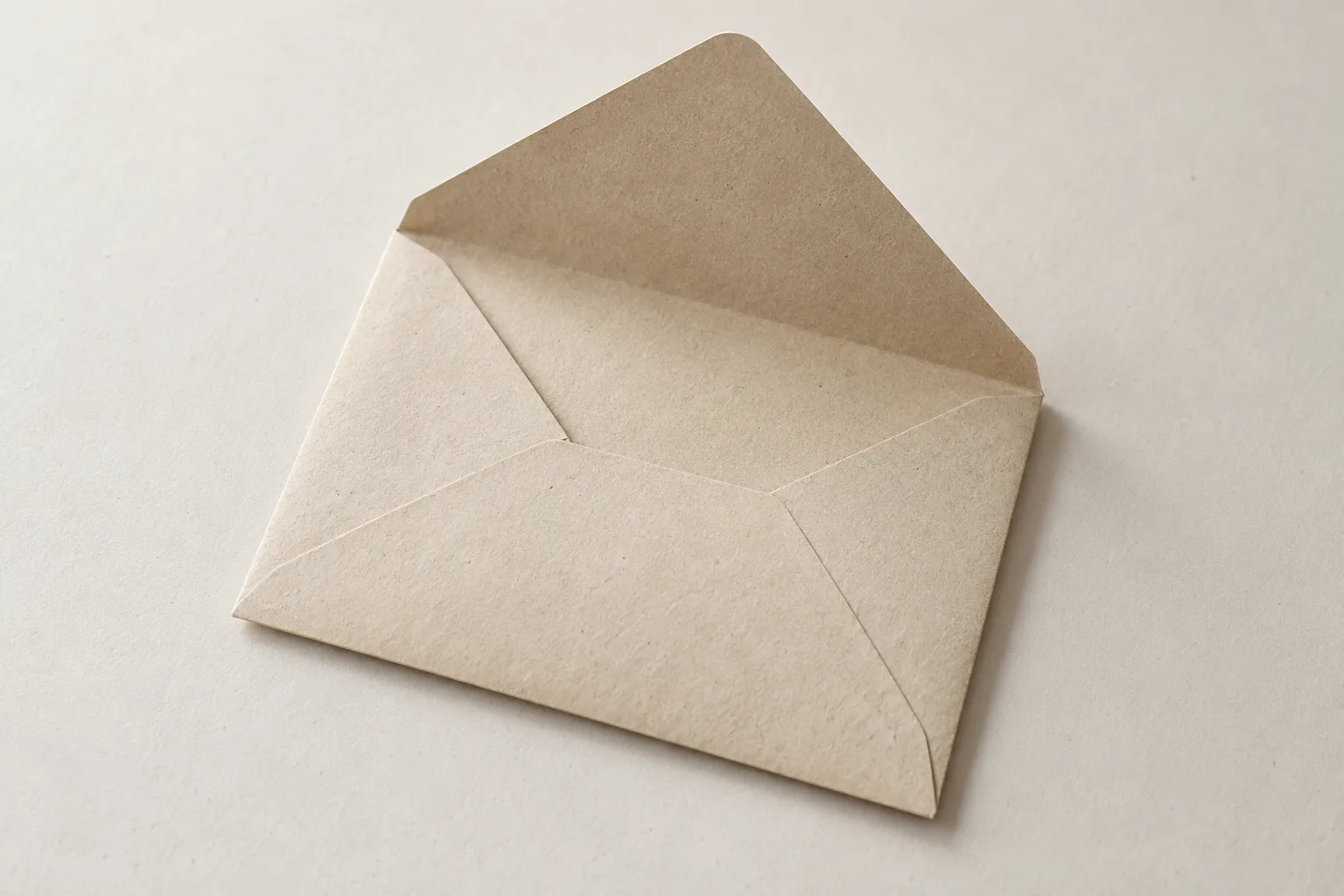
The envelope is an application concept, not evidence of a fibre recipe, physical paper grade or environmental assessment.
Alternative fibre is not a single performance class. Bamboo, bagasse, grass or cotton must be tied to a specific grade description. FIBREWORK organises these material directions; the family name does not mean that every fibre is available from stock or establish packaging strength, print compatibility or an environmental advantage.
Put the application in the sample brief
Start a sample brief with the use, then the source requirement. An envelope calls for checks on folds, bonding and writing. A catalogue calls for images, fine type and page handling. A box wrap calls for corners and surface behaviour. A shared fibre name does not establish the same performance in these operations. Prototype the currently available grade against the intended project.
Keep the material story traceable
For a brand communicating material origins, retain the fibre name, confirmed proportion, document revision and applicable grade. Use traceable facts. Do not infer a recipe from a photograph or transfer another brand’s fibre percentages or test results into VANGLAM documentation.
Compare on a consistent basis
Does bamboo or bagasse automatically have a lower environmental impact than wood fibre? The name alone cannot establish that. A comparison needs a defined subject and method, including the relevant life-cycle stages. Without comparable evidence, describe the source accurately without a broad superiority claim. The European Commission’s LCA introduction considers stages from raw materials and manufacturing through use and end of life.
Give the design and print teams both the source information and the actual sample: one describes the material, the other helps establish how it works in the project. Further reading: Life Cycle Assessment and Environmental Footprint methods. This is a methodological reference, not an assessment result for a QiLi paper.