
Why do carton folds crack and show white? Causes, paper choice and a proofing checklist
Fold cracking is one of the most common complaints on dark packaging. It comes from ink and coating, grain direction and humidity — here is how paper choice and scoring help.
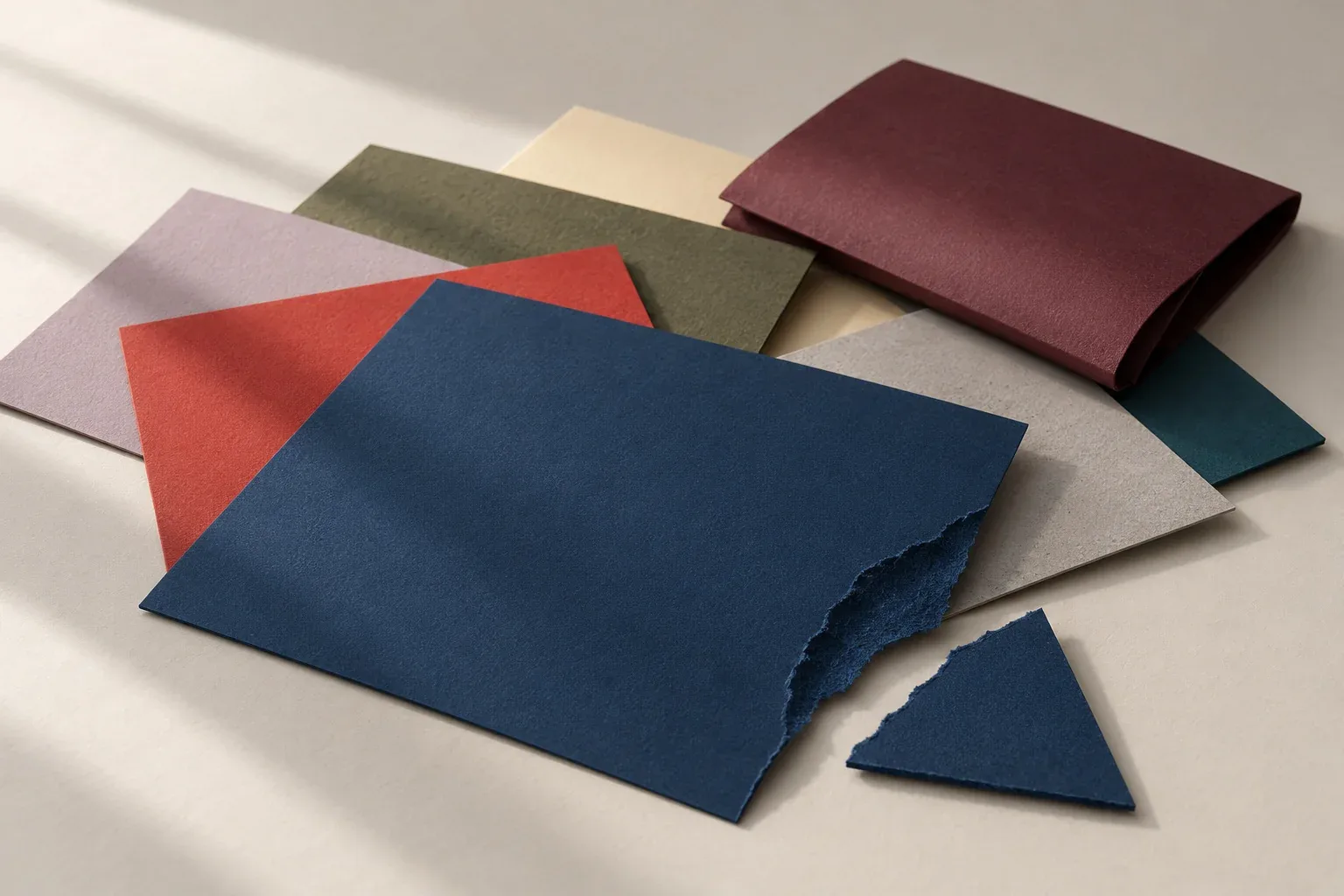
Fold cracking is when a carton, bag or card splits along the score and exposes white fibre. It is most visible on dark solid printing, and it is often only noticed after delivery.
Why do folds crack?
Hard ink and coating: dark solids, hard UV or varnish across the fold are the first to split.
Wrong grain direction: folding across the grain cracks more easily than folding with it.
Mismatched scoring: rule width and depth do not suit the board thickness.
Dry conditions: paper with low moisture in dry seasons is more brittle.
A white core: once the surface splits, white shows.
Which paper helps?
Colour-through paper: PALETTE (40 colours) carries its colour in the sheet, so even a fine split at the fold does not show white, and it reduces the need for flood printing.
Papers with stiffness and folding strength: 素映 IMPRINT is full wood pulp with high stiffness and good folding; CHROMA has good stiffness and folding.
A surface without film: use SOFTSKIN's soft-touch coating instead of soft-touch film, removing a layer.
Scoring and production
Fix grain direction first and run the main folds parallel to the grain where possible.
Match rule width and depth to the board thickness, and test-fold small samples first.
Keep large dark solids and hard UV off the fold, or switch to open space or local graphics there.
Condition paper to the pressroom before converting, especially in dry seasons.
Proofing checklist
Make several finished samples with the real carton style and cutting rule.
Open and close them repeatedly in the driest conditions you expect, and inspect the folds.
Record grain direction, scoring specification and ink film as the production standard.
Printing and finishing suitability for VANGLAM papers is confirmed for the selected grade and the actual process.