
Which paper is best for hot foil stamping? Foil suitability by surface type
Foil quality depends on surface smoothness, coating and artwork detail. What to check on each VANGLAM surface, the most common foil faults, and a proofing checklist.
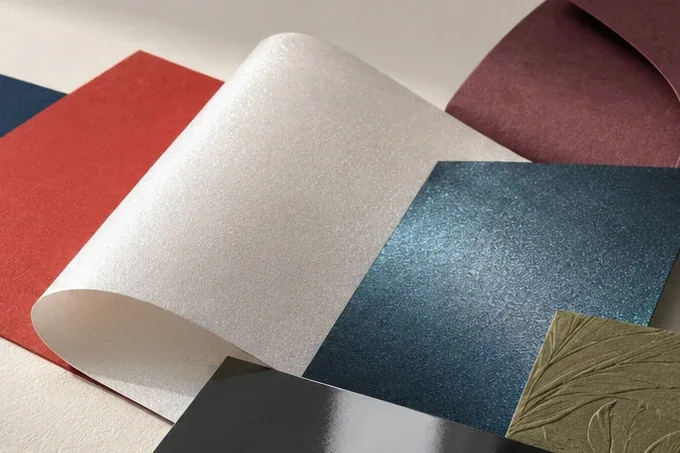
Foil sharpness starts with the surface. The smoother and denser it is, the more completely the foil transfers and the cleaner the edge; the deeper the texture or the softer the sheet, the more pressure is needed and the more detail is lost. So the question is not just whether a paper can be foiled, but whether this paper, this artwork and this foil will work together.
What to check on each surface
Coated white (细映 IMPRINT): a smooth surface that suits fine type and hairlines, and a safe starting point for detailed foil.
White pearl (HALO) and coloured pearl (CHROMA): smooth surfaces where pearl and metallic foil can compete, so compare with the actual foil colour.
Mirror gloss (GLAZE): matt gold or silver foil contrasts with the mirror surface; bright gold contrasts less and should be judged on a sample.
Soft touch (SOFTSKIN Classic is foil-stampable): a softer coating, so pressure, temperature and foil type need adjusting, and very small type breaks up more easily.
Texture (GRAINFORM) and EARTH: texture and fibre make fine lines broken, so use bolder artwork or combine foil with blind embossing.
Colour-through (PALETTE): gold or silver on dark colour gives strong contrast, and the colour runs through the core, so trimmed edges never show white.
The three most common foil faults
Fill-in: tight type and too much pressure let the foil flood the counters. Increase size and spacing and test small first.
Patchy or flaking foil: poor adhesion, often on soft coatings or varnishes containing wax or silicone. Foil first, then varnish or laminate where needed.
Rough edges: textured or soft surfaces deform under pressure. Choose a smoother paper or bolder artwork.
Confirm in one proof
Paper name and weight, shared with the foil stamper so the foil can be matched.
Foil on the smallest type and finest lines.
The order of foil, scoring, die-cutting and embossing.
Rub resistance of the finished piece in transit and handling.
Printing and finishing suitability for VANGLAM papers is confirmed for the selected grade and the actual process. Sample books are free; overseas shipping is paid by the recipient.