
Receiving specialty paper: checks before printing
Keep grade and batch records, confirm handling before opening, and protect unused paper before the next production step.
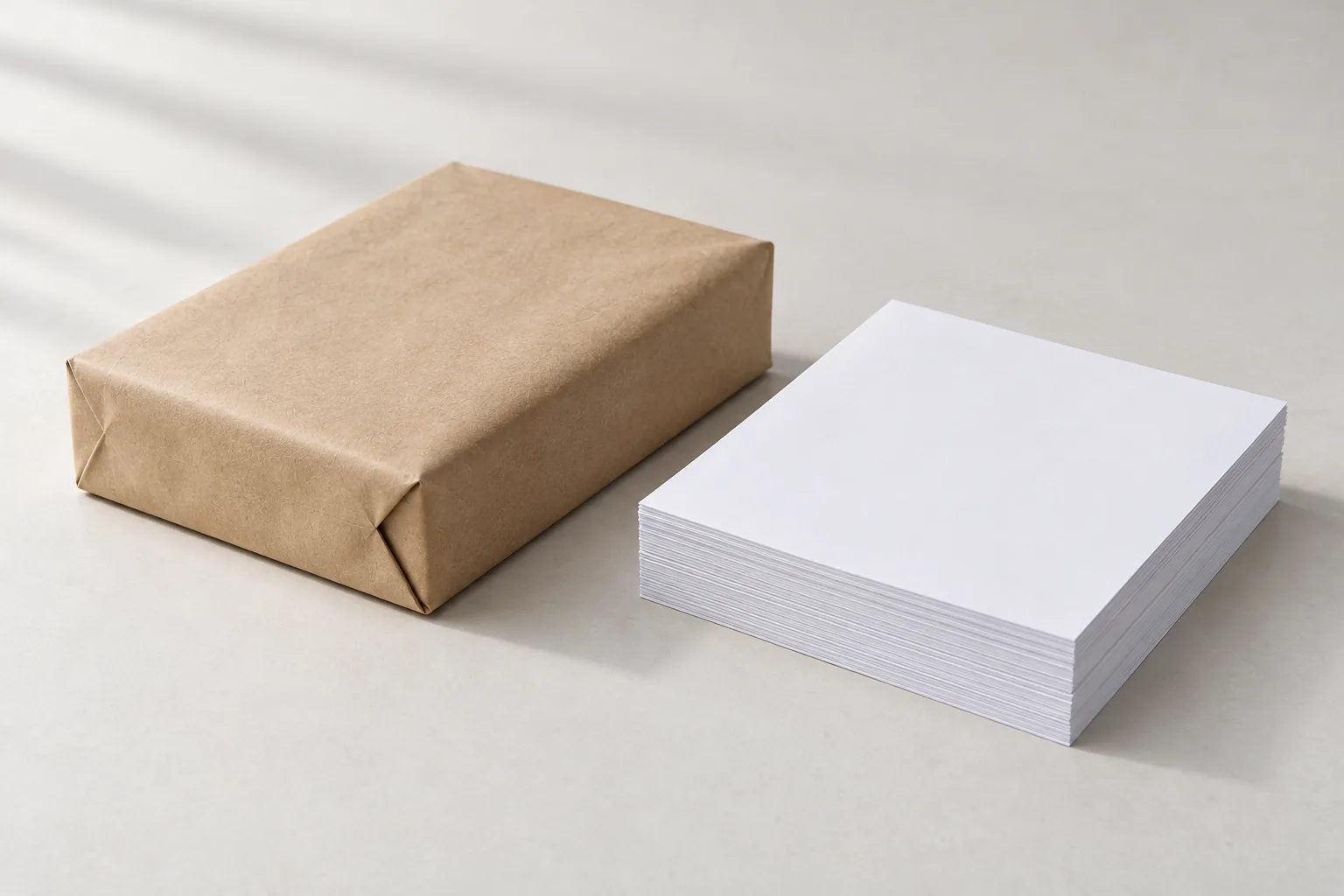
The image is an editorial concept about paper preparation, not QiLi delivery packaging, a storage specification or a workshop record.
Match the material record to the goods received. A handover record can include the order, grade, specification, batch or supplier traceability reference, arrival time and outer-packaging condition. Photograph visible damage or moisture concerns and retain identifying labels, keeping affected material distinguishable from stock ready for production.
Confirm the opening conditions
Decide when to open the package using the grade-specific handling guidance and site conditions. Paper responds to environmental change, so differences between transport, storage and the pressroom should be known to the material and production teams. IMPRINT, HALO and SOFTSKIN have different surfaces and uses. Another manufacturer’s climate ranges or waiting times are not universal instructions for QiLi papers.
Review the stock before printing
Before printing, reconcile the actual stock and artwork revision, then check flatness, edges and feeding behaviour. If something is unusual, record the observation and batch before deciding what further review is needed. Base that decision on the proposed material and equipment, not the series name or experience from a previous order alone.
Keep unused paper identifiable
Protect unused paper according to the applicable guidance and keep its identity attached. When it returns to storage or moves to another process, record the remaining quantity, opening status and destination. This helps the next person distinguish unopened stock, work in progress and material awaiting a decision.
Can the stock go straight to press?
Can paper be opened and printed immediately on arrival? Check its handling requirements and the local conditions before the printer schedules use. Provide the intended application, production process and unresolved questions with the project brief. Method reference: Holmen Paperboard Handling Information. It informs general handling and traceability practice; its climate settings, time tables and product commitments do not apply to QiLi grades.