
Paper shopping bags: what to check in the prototype
Review the paper, construction and connections together. Explore PALETTE and CHROMA, then check handles, the base, seams and a complete bag prototype.
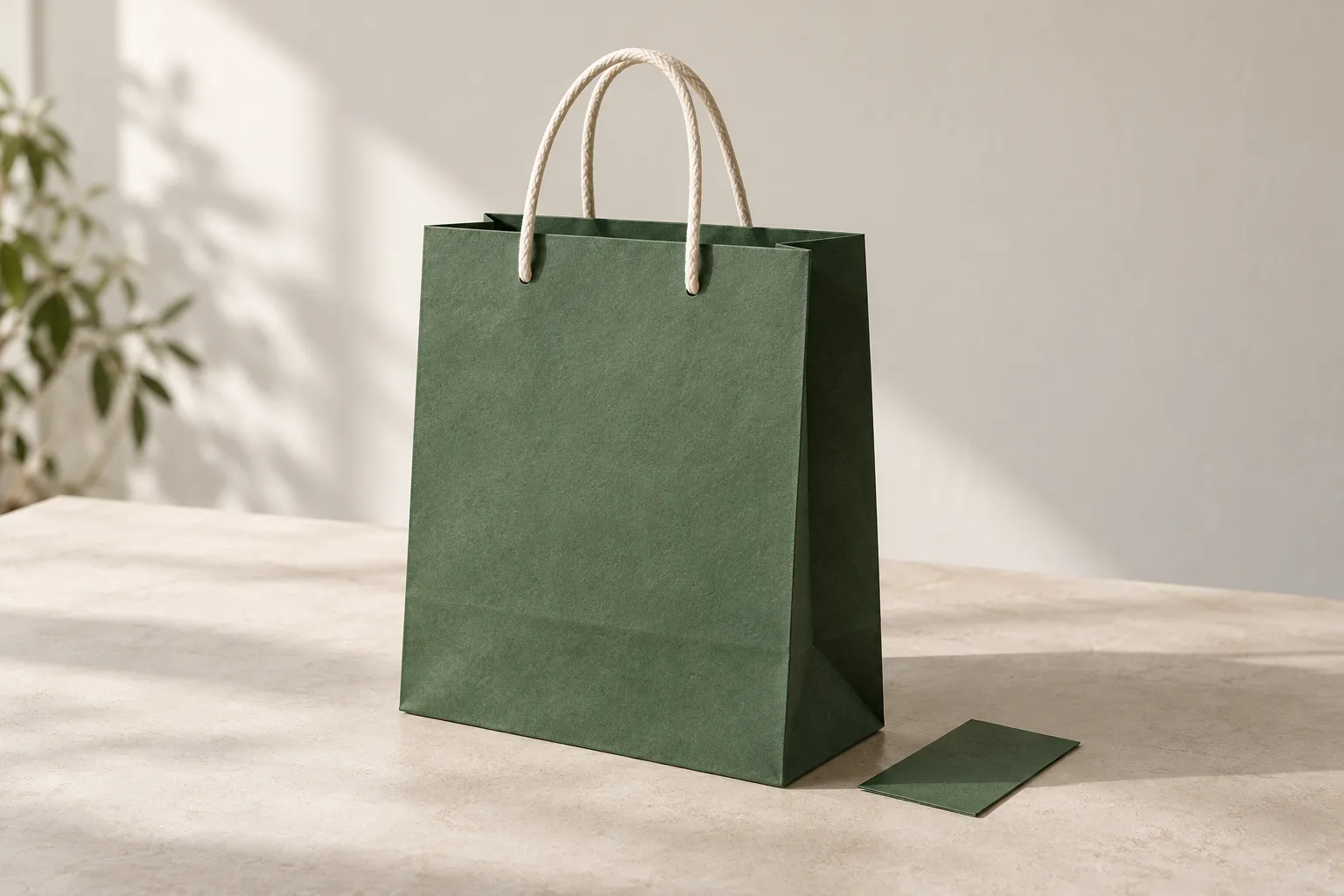
The image is a shopping-bag application concept, not a photograph of a specific grade, customer project or load test.
Choose shopping-bag paper together with the bag construction, handles and base. Surface appearance is one part of the brief. The intended contents, carrying method and frequency of use determine what the prototype must establish.
PALETTE offers an uncoated colour-paper direction; CHROMA offers coloured pearlescence. Confirm the available grade, thickness and converting conditions before the bag maker sets the grain direction, side seam, folded base and handle attachment. A material photograph cannot establish load capacity.
Make the prototype to its final dimensions with the intended contents. Record the handle holes, reinforcement, base seams and fold performance. Recheck the finished bag after printing and surface treatment: the relationship between coatings, ink and bonding areas needs to be established in the actual trial. Retain the approved bag, paper identification and process record before production so repeat batches can be reviewed.
Can another paper of the same grammage be substituted directly? Not on grammage alone. It measures mass per unit area; thickness, grain direction, surface and bonding behaviour may differ. Trial the original construction and handles again when changing stock, and assess the intended use with a complete bag.
Method reference: Fedrigoni Special Papers Glossary, including grammage, grain direction and creasing. These are general references, not QiLi specifications or load-test results. When requesting samples, provide the bag dimensions, intended contents and printing and finishing brief.