
Gift boxes: choosing wrapping paper and structural board
Review wrapping paper, structural board and the complete box separately. Consider PALETTE and GRAINFORM, then validate corners, turned edges, bonding and intended use.
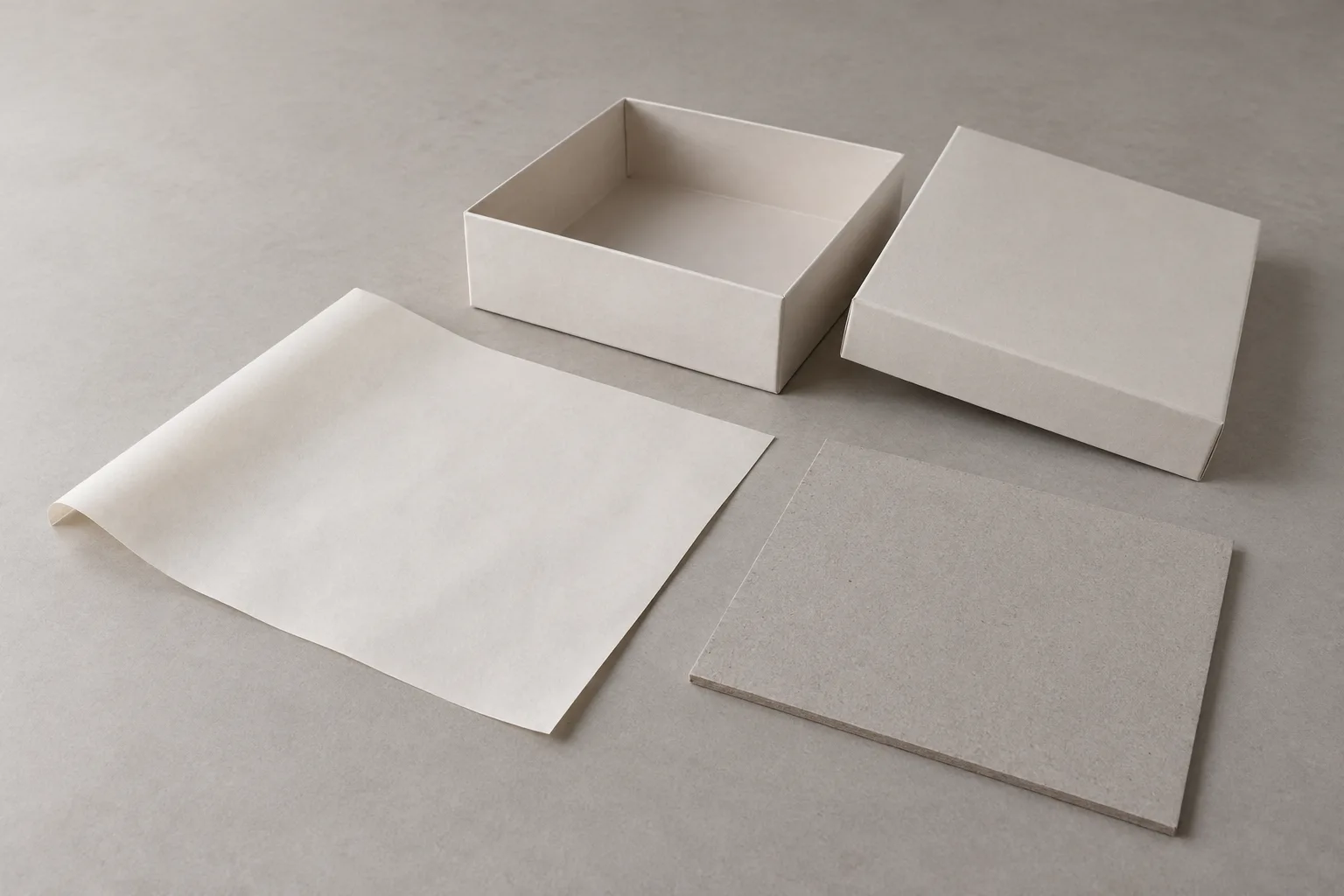
The image is a packaging application concept, not a photograph of a specific grade, customer project or test result.
Wrapping paper gives a rigid gift box its surface, colour and finish. Structural board provides support. Both contribute to the finished pack: a thicker wrapping paper does not by itself establish the load capacity or compression resistance of the complete box.
PALETTE offers a colour-led, uncoated wrapping direction. GRAINFORM brings a distinct surface texture to packaging projects. Specify the wrapping stock, structural board, lining, adhesive and construction separately. A single request for gift-box paper leaves too much open to interpretation.
Include corners, turned edges, seams and lid fit in the prototype. Review accumulated thickness, paper grain direction, the adhesive layer and flatness after drying. Provide the finished construction and flat dimensions before quotation so the converter can assess material use and cutting. Grammage alone cannot establish whether a box design will work.
Method reference: Holmen General Technical Information. This supports general discussion of paperboard grain, converting and storage. Confirm the selected QiLi grade and complete package for each project; another supplier’s specifications are not QiLi performance data.
Send a brief for the intended box construction
Compare wrapping directions through coloured uncoated papers and embossed papers, then use the premium-packaging paper guide to define each component. When requesting rigid-box wrap samples, state finished and open dimensions, board and liner plans, corners and turn-ins, adhesive and finishing. Mark undecided construction details for confirmation, and retain material samples separately from the complete box prototype.