
Comparing Specialty Papers: From Fedrigoni, Gmund and Colorplan to a Local Shortlist
An imported sample book is a reasonable starting point. When building a local shortlist, make “something like this” more precise. Is the priority colour, touch, light effect, a particular finishing result, or supply conditions? Those requirements may not all lead to the same candidate.
An imported sample book is a reasonable starting point. When building a local shortlist, make “something like this” more precise. Is the priority colour, touch, light effect, a particular finishing result, or supply conditions? Those requirements may not all lead to the same candidate.
Read the conditions behind the reference
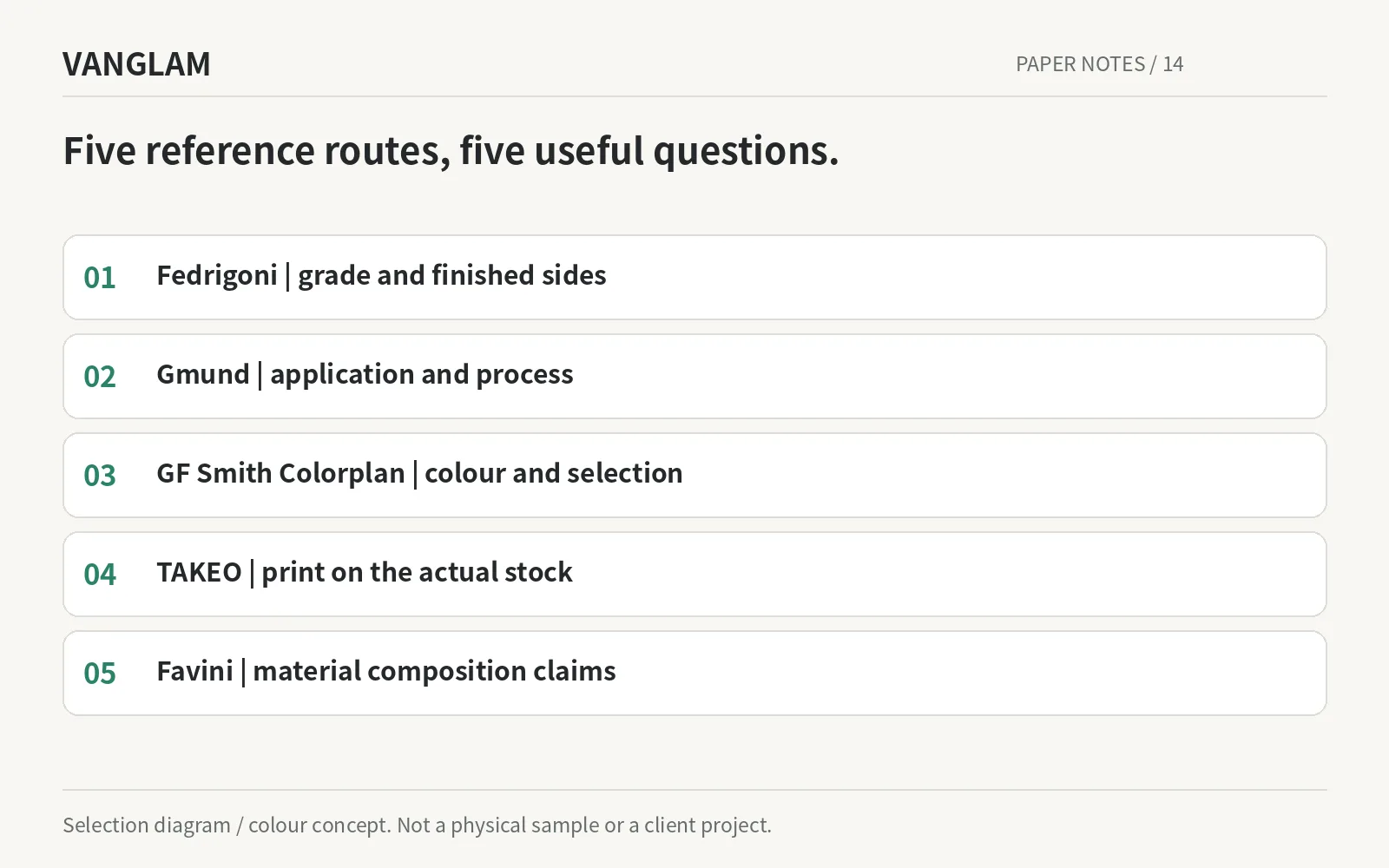
Fedrigoni’s Sirio Pearl information illustrates why format and finished sides matter. Gmund Colors Matt connects its papers to applications and printing methods. GF Smith’s Colorplan selection separates colour, embossing, weight and size.[1][2][3]
TAKEO’s process examples help frame print discussions. Favini’s Crush information explains process-residue use, including substitution of up to 15% of virgin tree pulp.[4][5] These are descriptions of those brands’ materials, not specifications transferable to QiLi papers.
Original selection diagram / colour concept. Confirm paper, colour and processes physically.
Turn “replacement” into a comparison brief
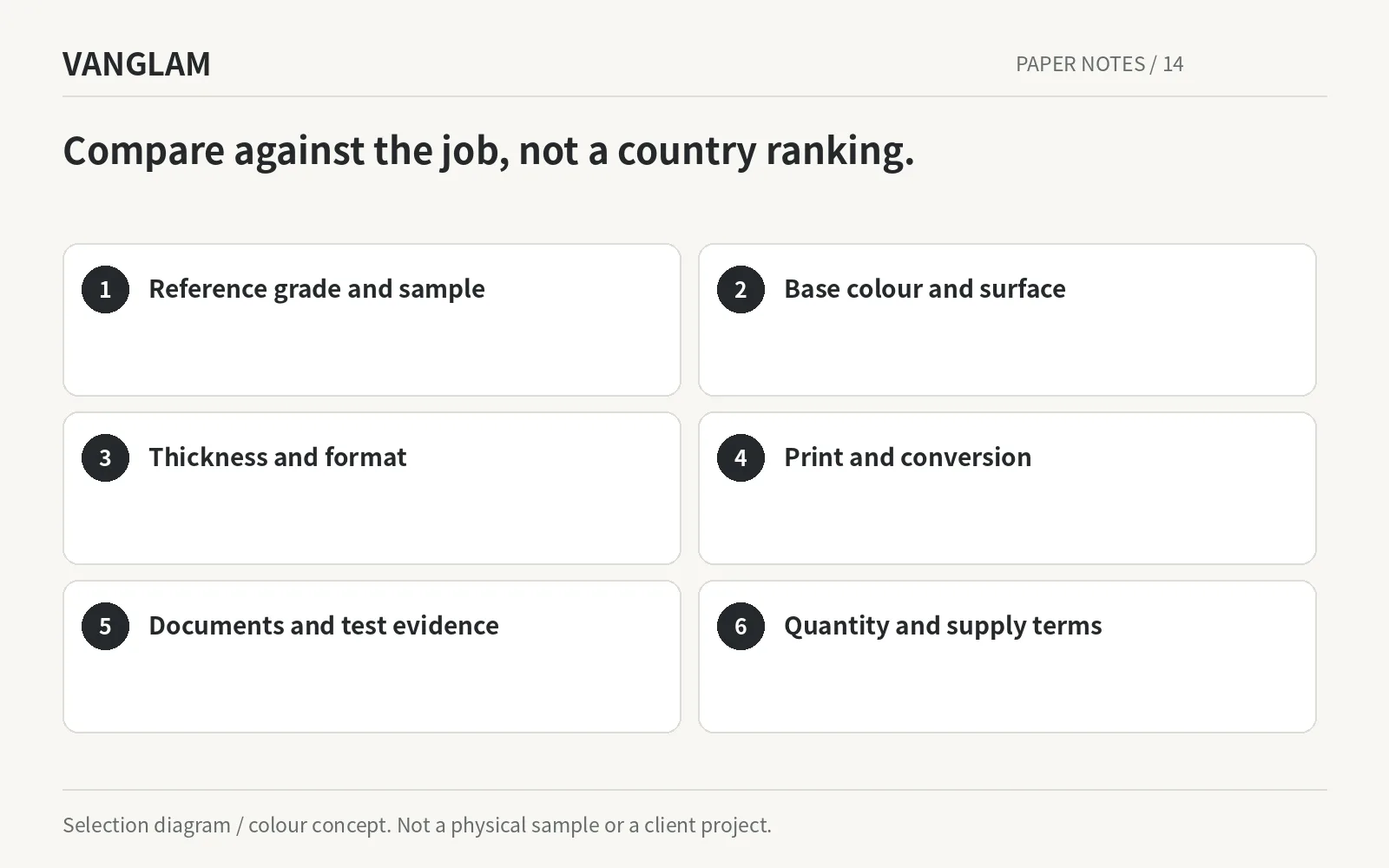
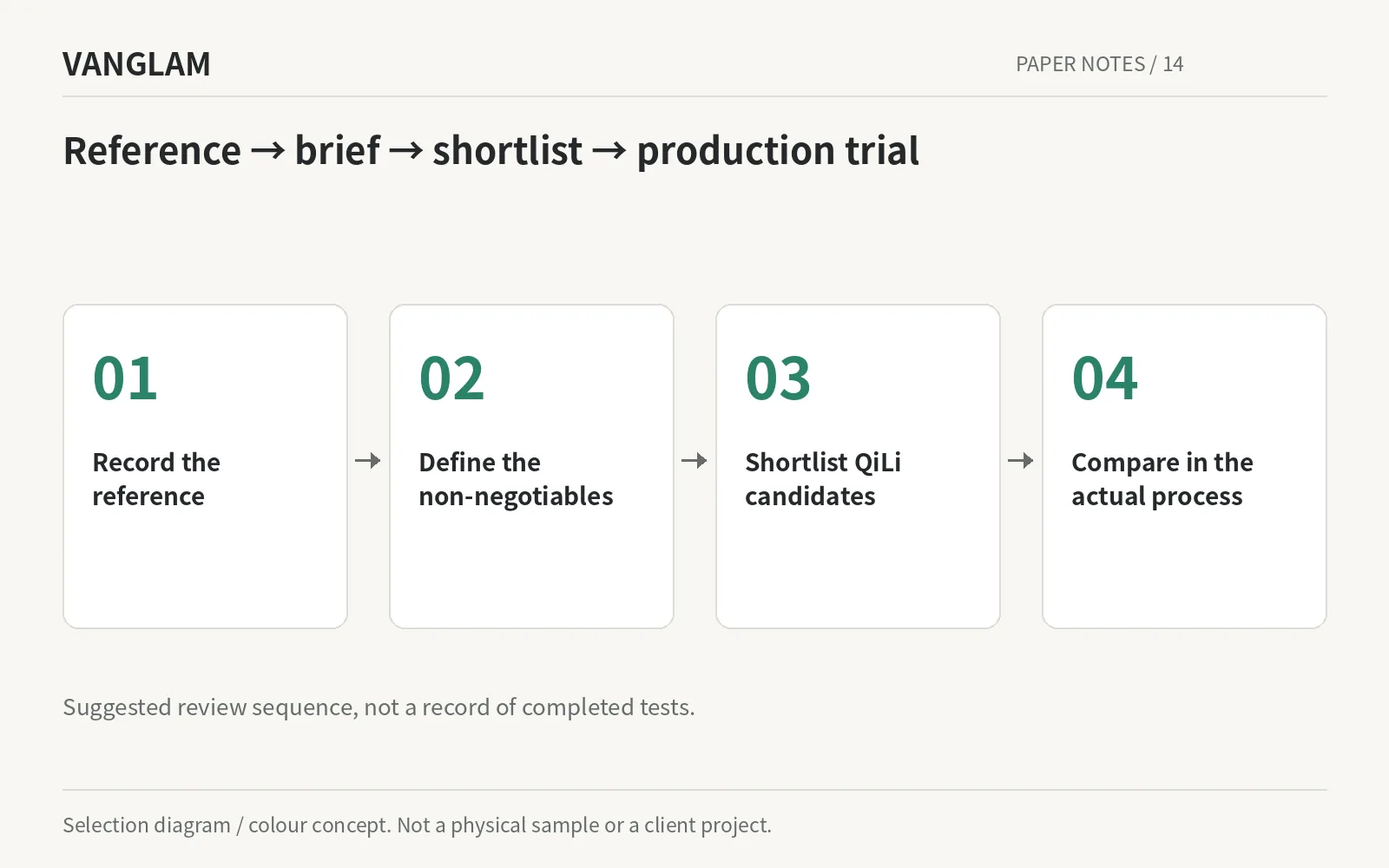
Record the reference grade, specification, required sides and sample provenance. Then distinguish requirements that must be retained from those open to change. Trial candidates with the same artwork and comparable conditions, reviewing colour, optical effect, type, conversion and use separately.
Include quantity, format, yield assumptions, supply timing and validation costs in the comparison. A domestic candidate is a material entering a fair assessment—not an automatic claim of lower cost, superior performance or exact equivalence.
Original selection diagram / colour concept. Confirm paper, colour and processes physically.
Describe QiLi through its own work
QiLi works in coating, surface treatment and related conversion. VANGLAM organises the discussion through a 40-colour reference and material families. HALO, CHROMA, SOFTSKIN and IMPRINT provide different directions for different briefs.
A useful discussion starts with physical references and production requirements, not a blanket “dupe” label. The third-party names here are used for material research. They do not indicate agency, authorisation, affiliation or a partnership with QiLi.
Original selection diagram / colour concept. Confirm paper, colour and processes physically.
For an imported-paper reference, send the grade name, physical sample and intended use. Discuss the requirements, not only photographic resemblance.
References
[5] Favini — Crush