
Does packaging need lamination? Start with its use
Define what needs protection before comparing bare paper, varnish and lamination. Consider touch alongside handling, staining and service life.
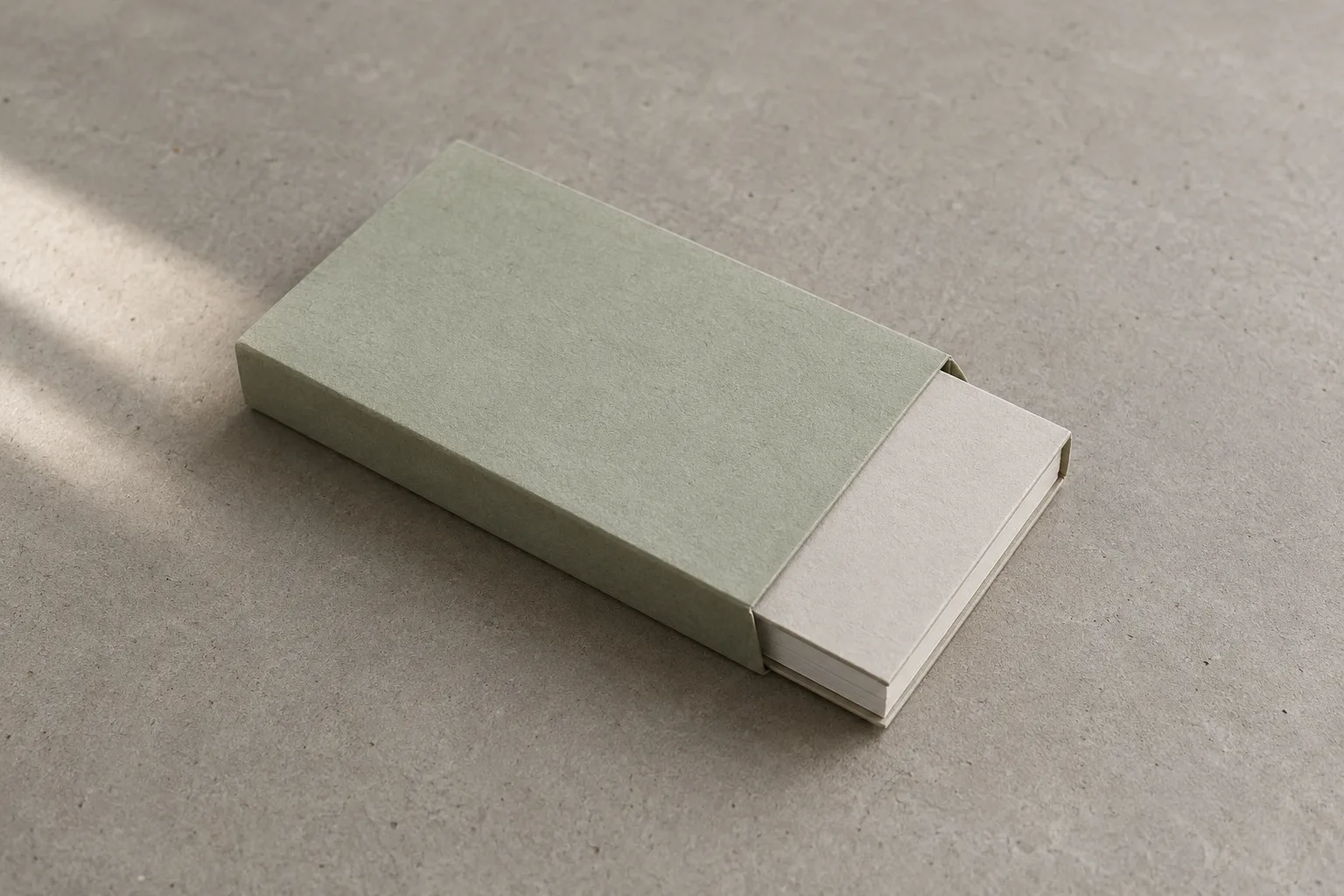
The book and slipcase are an application concept, not an actual paper grade or a surface-treatment test.
Start with how the packaging will be used. Repeatedly sliding a book into a case, transporting a gift box and carrying a shopping bag create different handling conditions. Describe the protection problem first, then decide whether a surface treatment is needed and where it should be applied.
Begin with the paper surface
SOFTSKIN offers a tactile-paper direction; PALETTE offers a fine matte coloured surface. Begin with the paper’s own appearance and feel, then discuss protection. Confirm touch, printing and durability in the final combination. A family name does not establish one level of rub or stain resistance.
Compare finished options
Prepare an untreated option and the proposed finished option using the actual paper. Compare appearance, feel and use under consistent conditions. Include folds, wrapped corners, seams and frequently touched areas. Record the paper, printing, finishing and observation conditions rather than deciding from a loose flat sheet alone.
Discuss durability and recovery together
Fedrigoni Pulp’s printing guidance considers appearance, feel, durability and finishing together. For a QiLi project, use that as a discussion method: ask the brand to define the surface character to retain, the converter to explain the protection needed, and the team to review the finished item’s recovery goals. Removing one treatment alone does not quantify an environmental benefit.
Can tactile paper replace lamination entirely? It can be considered, but the answer depends on the use and verified finished-item performance. Choose a combination that meets the required functions and retain the approved sample for production and repeat orders. Further reading: Fedrigoni Pulp’s sustainable printing guidance.